Burnout Recovery Coach and Workforce Performance Consultant Across the United States


Recover From Burnout Without Sacrificing Success
Helping professionals recover from burnout and helping organizations reduce workplace burnout through sustainable performance strategies that support long-term success.
For Professionals
For Organizations
Consultant • Speaker • Author • Trainer
Trusted Across Healthcare, Behavioral Health & Organizational Leadership
Burnout is No Longer an Individual Problem - It's a Workforce Performance Crisis
High-achieving professionals are exhausted.
Organizations are losing experienced employees faster than they can replace them.
Leaders are being asked to maintain performance inside systems that are no longer sustainable.
Workplace burnout affects...
Employee retention.
Organizational culture.
Leadership capacity.
Healthcare costs.
Productivity.
Long-term workforce stability.
The traditional model of success - pushing harder, working harder, and sacrificing personal well-being is breaking people and weakening organizations.
Sustainable performance requires a different apprach.
Trusted Burnout Recovery & Workforce Performance Expert

Deidre Gestrin
Consultant, Speaker, Author, & Trainer
With over 20 years specializing in stress, trauma, burnout recovery, and behavioral health leadership, Deidre Gestrin helps professionals and organizations create sustainable performance without sacrificing health, purpose, and people.
Deidre is also the author of:
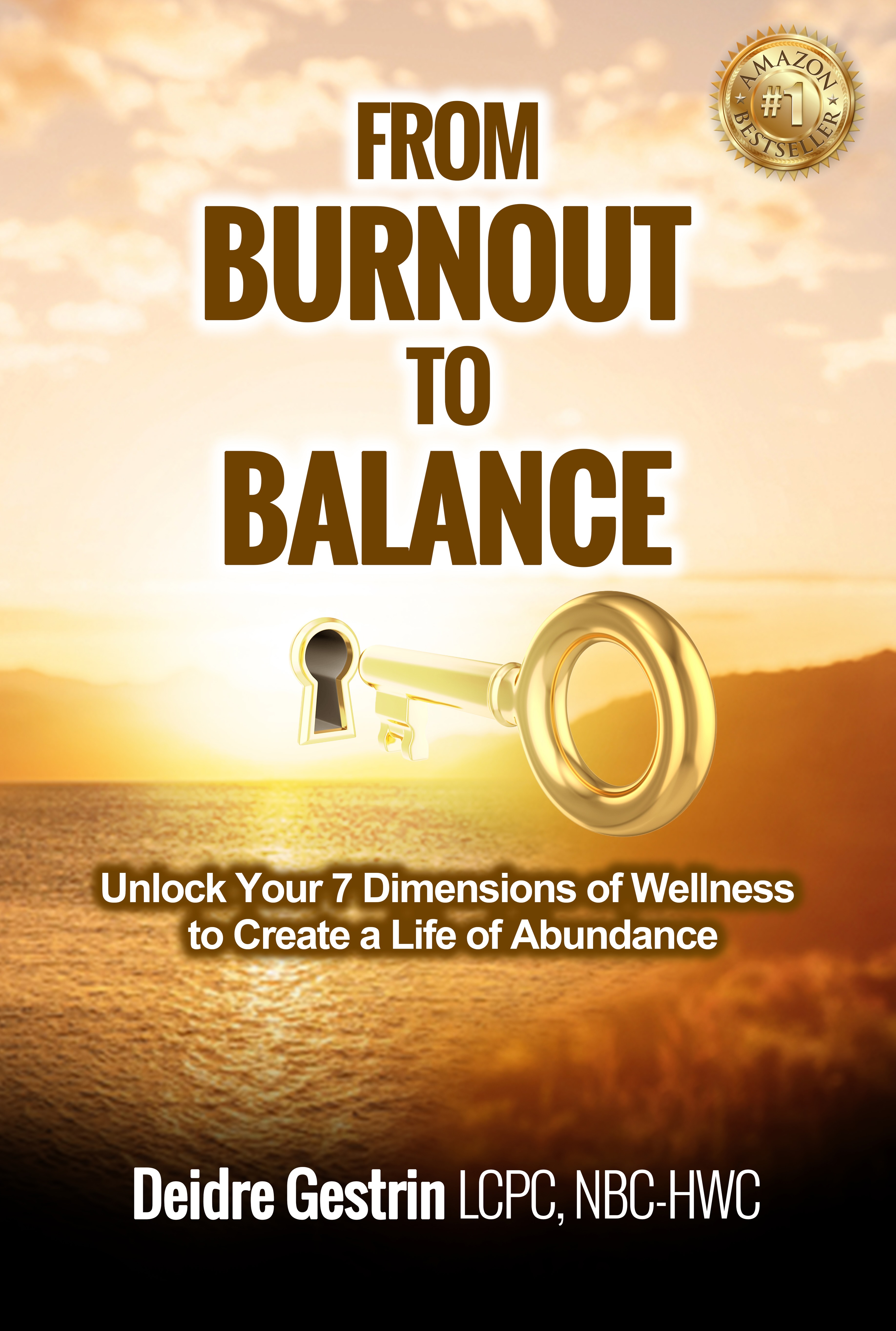
From Burnout to Balance: Unlock Your 7 Dimensions of Wellness to Create a Life of Abundance
Trusted Across Clinical and Organizational Settings
Experience includes behavioral health leadership with a focus on developing high-performing teams, strengthening workforce resilience, and enhancing clinical supervision.
Expertise in program design, system optimization, and telehealth enables scalable, efficient care delivery that supports both organizational performance and individual well-being.
Helping Professionals & Organizations Recover, Stabilize, and Perform Sustainbly
Healthcare professionals, executives, entrepreneurs, and high-achievers experiencing burnout, chronic stress, compassion fatigue, emotional exhaustion, loss of purpose, and work-life imbalance.
Healthcare and behavioral health organizations struggling with employee burnout, turnover, disengagement, unstable workforce performance, leadership strain, and rising operational costs.
High Pressure teams seeking healthier workplace culture, stronger communication, sustainable performance systems, leadership resilience, and workforce stability.
Burnout Recovery for High-Achieving Professionals
Burnout doesn't just affect your work.
It affects your energy, focus, relationships, sleep, health, and sense of purpose.

Through the The Sustainable Performance System™, professionals learn how to:
restore energy without stepping away from their career
regulate chronic stress and overwhelm
reconnect with purpose and clarity
create success without sacrificing their health or family
Organizational Burnout Consulting for Sustainable Workforce Performance
Burnout inside organizations leads to higher turnover, disengaged employees, leadership fatigue, increased insurance costs, and operational instability.

Through the The Sustainable Workforce System™, organizations learn how to:
strengthen leadership systems
improve team cohesion & reduce workforce burnout
stabilize operational performance
build healthier workplace culture
Real Results From Professionals & Organizations

"Deidre was able to help me get my clinical spark back!"
Beth Derickson
LCSW | Missouri

"I feel like I’m at a 90% success rate now."
Chris Grad
Business Owner, Entrepreneur | Idaho

"Deidre helped me get to the point where I am today."
Michelle Schmutzler
Psychiatric Tech Worker | Idaho
Sustainable Success Shouldn't Require Self-Sacrifice
Whether you're a professional trying to recover from burnout or an organization working to stabilize workforce performance, sustainable success is possible.
The Sustainable Performance System™
(Burnout Recovery for Professionals)
The Sustainable Workforce System™
(Organizational Consulting)
Don't Miss Out!
Workplace Burnout & Sustainable Performance Resources
How Chronic Stress Changes Your Thinking
How Chronic Stress Changes Your Thinking and Why Those Thoughts Feel True, But Aren't Accurate
Have you ever noticed that when you're stressed, everything feels harder? Problems seem bigger. Decisions feel overwhelming. Your confidence disappears.
What if the problem isn't your circumstances at all? What if chronic stress is changing the way you're interpreting those circumstances? Burnout doesn't just affect your energy. It affects your thinking. The thoughts you have during burnout often feel true, but that doesn't mean they're accurate.
The Stress Distortion Filter
I call this the stress distortion filter. The longer stress persists, the more distorted your thinking becomes. I lived through this myself. There was a period where everything felt harder than it should have been, and some of the common thoughts running through my mind were, maybe I'm not cut out for this, maybe I can't keep doing this. I was constantly thinking I was failing, wondering what was wrong with me.
My circumstances hadn't changed dramatically. My stress load had. My thinking was being filtered through a place of complete exhaustion and depletion. Once I understood what chronic stress was doing to my mind, I stopped believing every negative thought. Knowing the emotions were driving the distorted thoughts changed how I perceived them, and it changed how I approached my own recovery.
Here's what's actually happening. When stress becomes chronic, your brain prioritizes threats. It doesn't know the difference between a perceived threat and a real one. It just believes it's a threat and shifts into survival mode. That's when problems become more noticeable than possibilities, risk becomes louder than opportunity, and failures register more clearly than successes. All useful if you truly need a fight or flight response. A terrible place to try to build sustainable performance in the career you love.
Four Thinking Patterns That Show Up in Burnout
Catastrophizing. Everything feels urgent and small problems feel enormous. I remember when I was burnt out alongside colleagues who were experiencing the same level of stress. Everything that landed on our desks as managers felt urgent, whether it truly was or not, which kept us constantly scanning for the next crisis.
Self doubt. You start questioning your competence, and imposter syndrome often intensifies. Am I really good at my job? Can I actually help this person get where they want to go? That doubt isn't coming from who you are as a person. It's coming from a state of chronic stress and burnout.
All or nothing thinking. Either you succeed at everything or you fail at everything. If it isn't perfect, it feels terrible, with no middle ground in sight. This shows up constantly in behavioral healthcare, a field that lives almost entirely in the gray area, yet a burnt out brain in survival mode pushes everything to black and white.
Distortion of purpose. This is what I hear most often from clients. I don't know if this is what I'm supposed to do anymore. Or, I know this is what I'm supposed to do, but I don't know how long I can keep going. That disconnection from purpose happens because you've been in chronic stress for so long that your mind can't reconnect to meaning. All it sees is one threat after another.
Why High Achievers Are More Vulnerable
High achievers hold themselves to a higher standard, expecting to do everything without flaws. They notice mistakes faster because they perform at a high level, and they typically carry more responsibility because they're the ones who say yes. More responsibility increases how burnt out you feel, and it adds an internal pressure that says keep going, do more, don't stop.
Self criticism intensifies too. If you perform below your normal caliber, you'll likely critique yourself harshly. But that lower performance isn't happening because of who you are as a high performer. It's happening because your system has been under stress for too long. This connects directly to the sustainable performance gap. As a high performer loses capacity, confidence declines, clarity declines, and eventually performance falls, because you cannot sustain high output on low capacity indefinitely. Burnout often makes successful people feel unsuccessful. Remember, that feeling is a symptom, not the truth.
How This Shows Up in Leadership
Everybody leads in some capacity, even if it's just leading yourself. When a leader starts focusing more on problems than solutions, that's often a sign of functioning from chronic stress. Reactivity increases. I've shared before that I once cussed at a supervisor who had simply asked how I was doing that day. Not a moment I'm proud of, but an honest one.
Strategic thinking suffers too. If you used to think several steps ahead on a project and suddenly can't see past the next task, that's your strategic thinking function shutting down under stress. Leaders in this state often avoid difficult conversations, which leads to isolation. Teams notice. Uncertainty rises. Clarity drops. Confidence in leadership declines. This is exactly why burnout becomes an organizational issue and not just an individual one.
Moving From Awareness to Recovery
We can challenge and overcome these thinking patterns through my burnout to balance model and my SPARK Framework, which work closely together. It starts with recognition, the awareness stage where you ask, is this thought true, or is this thought stress? From there, we move into recovery. You cannot go from constant stress straight back to baseline as if nothing happened. Recovery requires space to work on your thoughts, attend to your emotions, and take intentional action, always starting with recovery first.
As energy and clarity return, we realign with our values and reconnect to purpose. From there, we reconnect to reality, the true perspective rather than the distorted one your mind has been running on. Recovery restores that perspective, but recovery has to come first. And through it all, consistency matters more than perfection. Good enough needs to be okay.
If chronic stress is affecting your thinking, don't wait until burnout becomes severe or starts affecting your physical body. Download the Stress to Peace Guide today for practical strategies and go to tools that can bring relief within two weeks.

As Seen In


© 2026 Abundant Wellness Essentials. All Rights Reserved.